
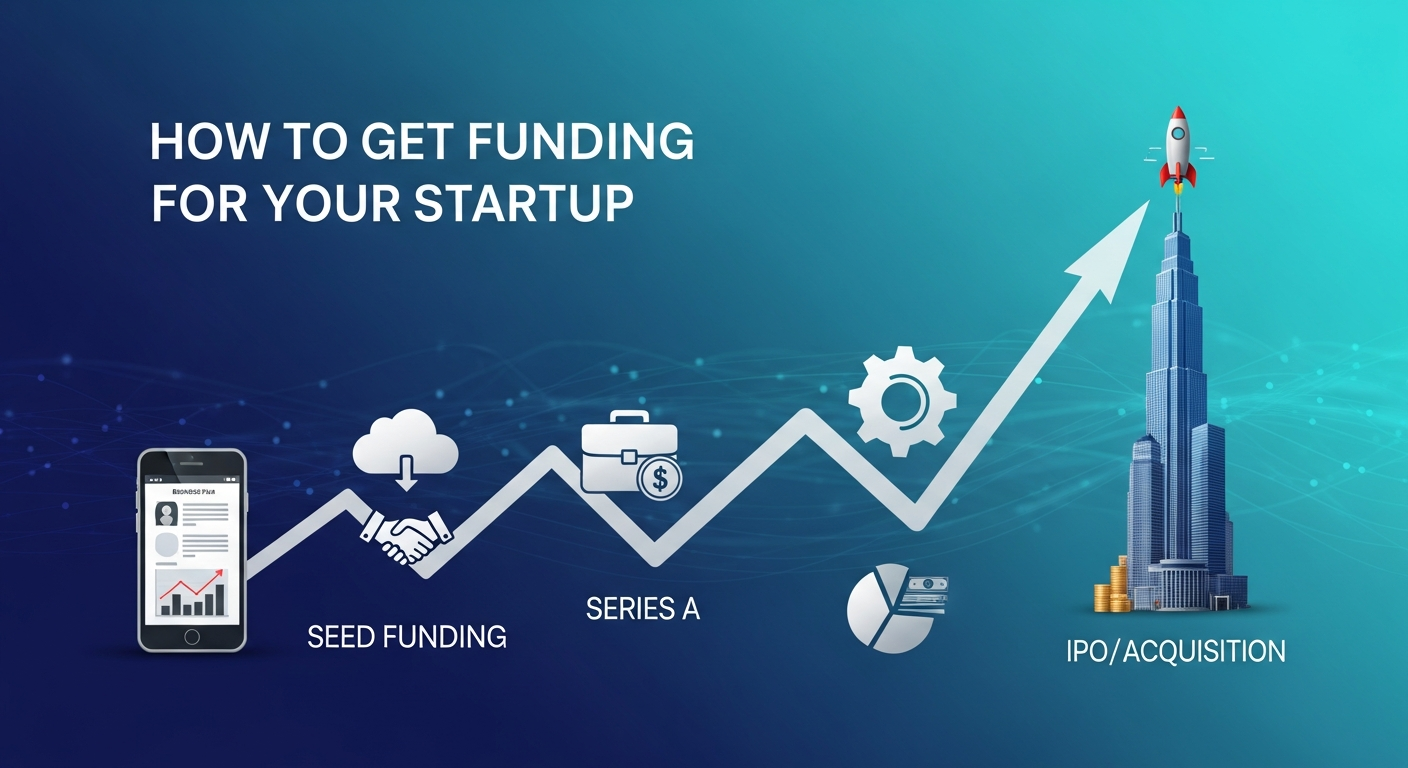
How to Get Funding for Startup: Invisible Steps & Smart Choices
Getting funding for a startup isn't just about having a great idea; it's about having your foundational elements firmly in place before you even approach investors. Most guides emphasize the pitch, overlooking the critical 'invisible steps'—the legal setup, financial readiness, and strategic choices that make investors confident. This guide reveals the essential groundwork and smart decisions separating funding dreams from funded realities, ensuring you're prepared for growth. Consider 'GreenThumb Gardens,' a hypothetical startup developing an AI-powered indoor gardening system. They've moved beyond the initial idea and are ready for seed funding. They need to legally incorporate as an S-Corp to optimize for future investment and understand that preparing detailed financial projections for the next 3-5 years, beyond a basic business plan, is crucial for attracting angel investors interested in their scalable tech.
Essential Preparations Before Seeking Startup Funding
Before you even think about pitching investors, building a solid foundation is. This means ensuring your legal structure is sound and your financial house is in order. Many entrepreneurs mistakenly focus on the pitch deck first. However, failing to have your legal entity and core financials properly established before approaching potential funders can lead to immediate disqualification. Investors need to see that you are serious and that the business is structured for both growth and regulatory compliance.
Business Registration & Legal Structure: LLC vs. S-Corp vs. C-Corp
Choosing the right legal structure is a critical early step for any startup aiming for potential funding. An LLC (Limited Liability Company) offers flexibility and pass-through taxation, taxing profits and losses on the owners' personal returns, often making it simpler to manage initially. An S-Corp (S Corporation) is a tax election that also allows pass-through taxation, avoiding corporate tax rates, but comes with more stringent operational rules. For startups targeting external investment, particularly venture capital, a C-corporation is often preferred due to its ability to issue different stock classes and its familiarity to VCs. While an LLC or S-Corp is a common starting point, understanding these distinctions is vital. Proper business registration confirms your startup's legitimacy, a non-negotiable prerequisite for any form of business funding.
Core Financial Documents & Projections
Having your startup's core financial documents and projections meticulously prepared is critical. Investors require a clear understanding of your company's financial health and future potential. This typically includes:
- Historical Financial Statements: If your startup is operational, present your income statement, balance sheet, and cash flow statement. Adhering to Generally Accepted Accounting Principles (GAAP) enhances investor confidence.
- Financial Projections: Develop realistic 3-5 year forecasts for revenue, expenses, and cash flow. These projections must be grounded in market analysis, sales strategy, and operational plans, not mere speculation. For instance, GreenThumb Gardens would detail how their AI system's projected sales growth will be achieved through targeted digital marketing campaigns and strategic partnerships.
- Capitalization Table (Cap Table): This document details ownership percentages, essential for investors to grasp the equity structure.
- Confidential Information Memorandum (CIM) & Data Room: A CIM offers an in-depth business overview, while a secure data room houses all essential startup documents, demonstrating readiness for due diligence. Industry analysis indicates companies with clear financial documentation and well-supported projections are significantly more likely to secure seed funding. Source
Setting Up Business Bank Accounts & Financial Tracking
You must open separate business bank accounts to maintain financial clarity. Commingling personal and business funds appears unprofessional and is a significant red flag for investors. This clear separation is crucial for accurate cash flow tracking, expense monitoring, and presenting clean financial statements when seeking startup funding.
- Establish a Dedicated Business Bank Account:
- This strictly separates personal and startup finances, avoiding confusion and potential legal issues. You'll typically need your business formation documents and an Employer Identification Number (EIN) from the IRS.
- What to expect: A new account with a business debit card and checks.
- Implement a strong Financial Tracking System:
- Utilize accounting software like QuickBooks or Xero, or a meticulously organized spreadsheet for early stages. Record every financial transaction accurately. This system is vital for generating financial reports and understanding your startup's financial standing.
- What to expect: A clear financial overview essential for investor presentations.
- Reconcile Accounts Regularly:
- Compare bank statements with your accounting records weekly or bi-weekly to ensure accuracy and promptly catch errors.
- What to expect: Confidence in up-to-date and correct financial records, crucial for demonstrating financial responsibility when seeking startup funding.
Preparing Loan Documents: Beyond the Basic Business Plan
Banks and venture capitalists require a thorough package of startup loan documents, not just a business plan. They need proof of your idea's viability and your ability to manage finances wisely. Many startups falter by underestimating the required paperwork.
- Gather Personal Financial Statements:
- Lenders will assess your personal credit history and finances, especially for small business loans. Compile recent tax returns, bank statements, and a net worth statement.
- What to expect: A review of your personal financial background to ascertain creditworthiness and commitment.
- Prepare Detailed Business Financial Projections:
- This includes cash flow statements, income statements, and balance sheets for 3-5 years. Base these on solid market research and realistic sales, cost, and growth estimates. For GreenThumb Gardens, this means projecting revenue from system sales, subscription services for AI updates, and potential B2B installations.
- What to expect: A detailed financial roadmap outlining profitability strategies.
- Have Legal Formation Documents Ready:
- Keep copies of your Articles of Incorporation/Organization, Operating Agreement, and necessary permits/licenses accessible. These confirm legal setup and compliance.
- What to expect: Verification of your business's legal structure and operational authorization.
- Include Collateral Details (for Secured Loans):
- If applying for a secured loan, list assets like property, equipment, or inventory offered as collateral to mitigate lender risk.
- What to expect: Documentation of assets backing the loan.
Choosing the Right Funding Method for Your Startup
Selecting the optimal funding for your startup hinges on understanding your business model, growth trajectory, and long-term objectives. Don't chase trendy funding sources; align them with your business's actual growth path. A venture capital model is unsuitable for a lifestyle business. The goal is securing the right capital for your current stage and future aspirations.
Venture Capital & Angel Investors: High Growth, High Stakes
- Venture Capital (VC): Ideal for startups with substantial growth potential, particularly in tech. VCs provide significant capital (e.g., $500k-$2M+ for seed rounds) in exchange for substantial equity (15-25%), expecting high returns. Global venture investment reached approximately $300 billion in Q1 2026, with AI companies securing a significant portion. Source
- Angel Investors: Wealthy individuals providing capital ($25k-$1M) often earlier than VCs, also taking equity (15-25%). They typically offer faster decision-making and valuable mentorship. Global angel investment is projected to reach $34.47 billion in 2026. Source
Small Business Loans & SBA Programs: Stability vs. Control
- Small Business Loans: Debt financing from banks or online lenders. You retain equity but must repay with interest. This is suitable for businesses with steady cash flow.
- SBA Loans: Government-backed loans distributed through banks, often featuring better terms and longer repayment periods. The Small Business Administration (SBA) guarantees a portion, reducing bank risk. These loans typically range from $25k-$500k with 6-10% interest. Source
Crowdfunding & Grants: Community Support vs. Specific Eligibility
- Crowdfunding: Platforms like Kickstarter or Republic allow raising smaller amounts from many individuals, often through product pre-sales or equity. Expect fees (around 5%) plus payment processing costs (3-5%). It's effective for market validation and building a community.
- Startup Grants: Non-repayable funds from government agencies, foundations, or corporations for specific purposes (e.g., research, social impact). They are highly competitive due to strict eligibility criteria.
Bootstrapping & Friends/Family: Equity Preservation vs. Relationship Strain
- Bootstrapping: Funding your startup using personal savings or revenue generated by the business. This maintains full control and equity. Approximately 60% of bootstrapped startups become profitable within three years. Source
- Friends & Family: Obtaining capital from personal acquaintances. While potentially faster and less formal, it requires professional treatment with written agreements to protect both relationships and the business.
Why So Many Startups Struggle to Secure Funding
Most startups falter not due to a lack of a good idea, but because they cannot navigate the complex path to securing capital effectively. This often stems from critical missteps in how they present their vision and manage their finances. Focusing solely on the product while neglecting fundraising mechanics is a common, yet avoidable, pitfall leading to funding failure.
Pitch Deck Deficiencies & Storytelling Gaps
- Weak Problem/Solution Articulation: Founders often fail to clearly define the problem they solve and the uniqueness of their solution. Investors seek a compelling narrative, not just product features.
- Lack of Market Validation: Startups frequently present a product without demonstrating significant market demand. Approximately 42% of startup failures are attributed to a lack of market need. Source
- Unclear Go-to-Market Strategy: Founders may not articulate how they will effectively reach target customers or scale operations post-funding, leaving investors questioning growth viability.
Unrealistic Valuations & Financial Mismanagement
- Inflated Startup Valuation: Demanding a valuation misaligned with current traction, market potential, or comparable companies can immediately alienate investors.
- Poor Cash Flow Management: Running out of cash is a cited reason for failure by 29% of failed startups. Founders often underestimate burn rates or fail to implement tight financial controls, leading to premature insolvency. Source
- Inadequate Financial Projections: Overly optimistic or poorly substantiated financial forecasts are a major red flag. Investors expect realistic projections grounded in sound assumptions. For example, GreenThumb Gardens’ projections must realistically account for manufacturing costs, marketing spend, and customer acquisition costs, avoiding assumptions of exponential growth without clear drivers.
Fixing Common Startup Funding Problems
Encountering roadblocks during the funding process is common. Knowing how to address these issues is crucial for success. Let's explore why investors might pass, why loans get denied, and how to avoid relinquishing too much ownership prematurely.
Problem: Investors Aren't Interested
It's disheartening when investors don't see your startup's potential. Often, the pitch isn't resonating with their investment criteria. Many founders emphasize the product over the business's overall viability.
- Sharpen Your Pitch: Clearly articulate the problem, your unique solution, market size, business model, and traction. Investors need to see a clear path to a return on their investment.
- Your pitch deck must highlight market opportunity and scalability.
- Network Strategically: Avoid generic pitches. Identify investors whose past investments align with your industry and growth stage.
- Targeted outreach yields more productive engagement.
- Demonstrate Growth: User acquisition, revenue generation, or key partnerships significantly enhance your startup's appeal.
- Tangible progress reduces perceived risk for investors.
Troubleshooting:
- Why it's happening: Your pitch deck lacks clarity on your funding needs or customer acquisition strategy.
- What to do: Explicitly state the amount of funding required and detail its precise allocation towards specific growth targets.
Problem: Loan Application Denied
A loan denial can be discouraging, especially when you believe in your business. Banks often perceive startups as high-risk entities and require substantial proof of repayment capability.
- Strengthen Your Financials: Ensure financial forecasts are realistic and substantiated by thorough market research, with a strong emphasis on cash flow.
- Organized financial statements build lender confidence.
- Explore SBA Loans: The SBA's guarantee can mitigate lender risk, making approval more accessible for startups.
- This is a vital pathway when traditional banks are hesitant.
- Improve Personal Credit: For nascent startups, your personal credit score often significantly influences loan approval.
- A higher personal credit score can directly facilitate startup funding.
Troubleshooting:
- Why it's happening: Insufficient collateral or a limited business operating history.
- What to do: Consider alternative funding routes like grants, angel investors, or business lines of credit if collateral is a constraint.
Problem: Giving Up Too Much Equity Early
Diluting your ownership too early can jeopardize your startup's future rewards. Balancing the need for capital with retaining equity is critical for maximizing long-term gains.
- Seek Non-Dilutive Funding: Explore grants, revenue-based financing, or accelerators that provide capital without requiring equity.
- These options enable growth without ceding ownership.
- Negotiate Terms Carefully: If accepting venture capital, scrutinize valuation and dilution clauses to understand their long-term impact on your control.
- Astute negotiation preserves a larger ownership stake.
- Fund in Stages: Raise only the capital necessary for the next critical growth phase, rather than a large sum upfront.
- This prevents unnecessary equity giveaway by aligning funding with specific milestones.
Troubleshooting:
- Why it's happening: Agreeing to a very low valuation in early funding rounds.
- What to do: Focus on demonstrating solid progress and market potential to justify a higher valuation, thereby reducing dilution.
Frequently Asked Questions
What's the first step in how to get funding for startup?
The initial step involves thoroughly defining your business model and unique value proposition. Understand your target market, competitive landscape, and precisely how you solve a problem. A compelling pitch deck is instrumental in this phase.
Are there different types of funding for how to get funding for startup?
Yes, various funding options exist, including bootstrapping (self-funding), angel investors (individual financiers), venture capital (investment firms), crowdfunding, and small business loans. Each suits different startup stages and goals.
How much funding do I need when figuring out how to get funding for startup?
Develop a thorough financial plan detailing operational costs, marketing expenses, product development, and a contingency fund for unforeseen circumstances. Aim for enough capital to sustain operations for at least 18-24 months.
What are the 'invisible steps' in how to get funding for startup?
These crucial, often overlooked steps include establishing a strong legal structure, setting up separate business bank accounts, implementing meticulous financial tracking systems, building your professional network, and proactively seeking mentorship.
How do I make smart choices when learning how to get funding for startup?
Prioritize funding sources that align with your growth strategy and company culture. Consider what value investors bring beyond capital, such as industry expertise and connections. For GreenThumb Gardens, an investor with deep experience in AgTech would be highly valuable.
The Bottom Line
Securing startup funding in 2026 requires diligent preparation and strategic selection of funding pathways—whether venture capital, angel investors, loans, or other options. Don't merely chase capital; build a fundamentally fundable business by mastering the essential, often-unseen setup steps. Understand the nuances of each funding type and ensure your legal structure and documentation are impeccable. Doing this homework transforms your startup from a promising idea into an investable entity.